Saturday, March 9, 2013

Eating a Rainbow // A comer un arco iris


If you follow any kid-related blogs you have probably come across many rainbow projects!  A plethora of fun and creative ideas exist already, so I am not going to re-invent the wheel—or the rainbow.  I collected some of my favorite rainbow projects and put them in a list for you below.  You should really check them out...they are very fun!  If you want to see images head on over to my Pinterest page where I put them all in one spot for you!


Bubble Wrap Printed Rainbows from I HEART CRAFTY THINGS
Melted Bead Rainbow Magnet from I Can Teach My Child
Beaded Rainbow from I Can Teach My Child
Color Activities for Kids from In Lieu of Preschool

Each of these can be adapted and used for learning Spanish!  Just use the Spanish colors below.  Also check out these videos for help learning your colors in Spanish.

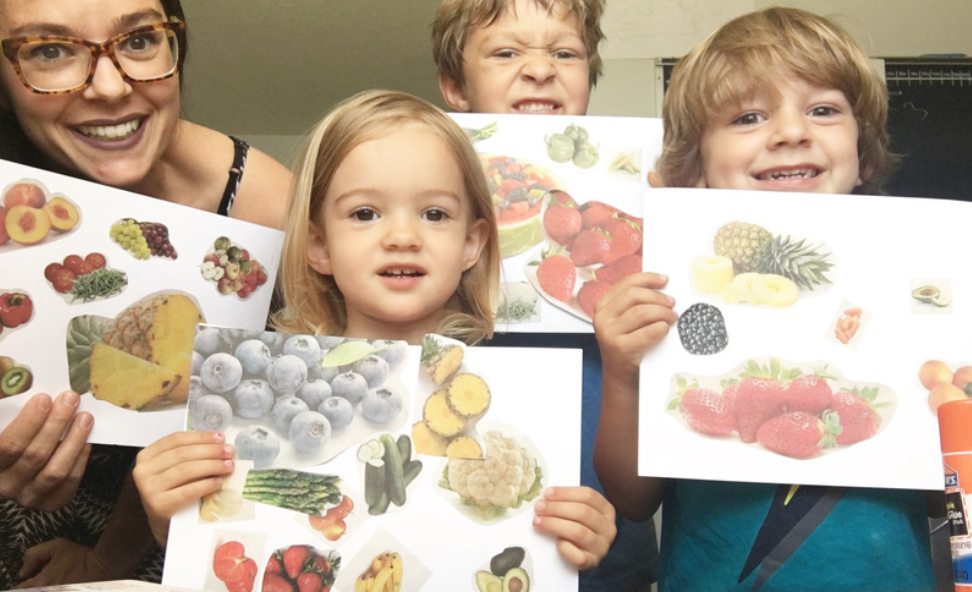
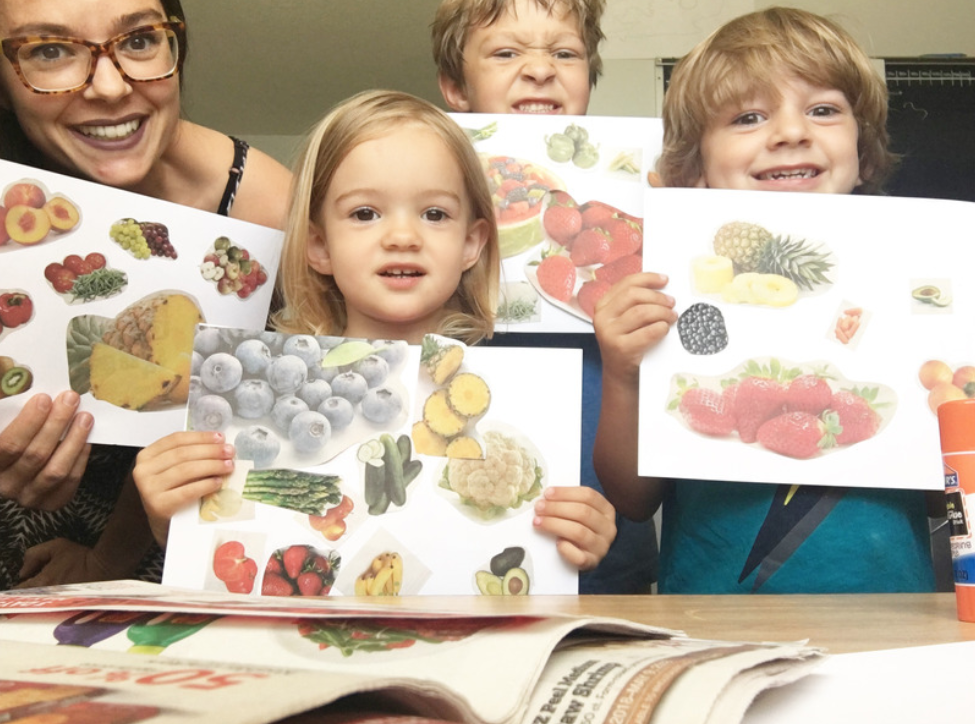
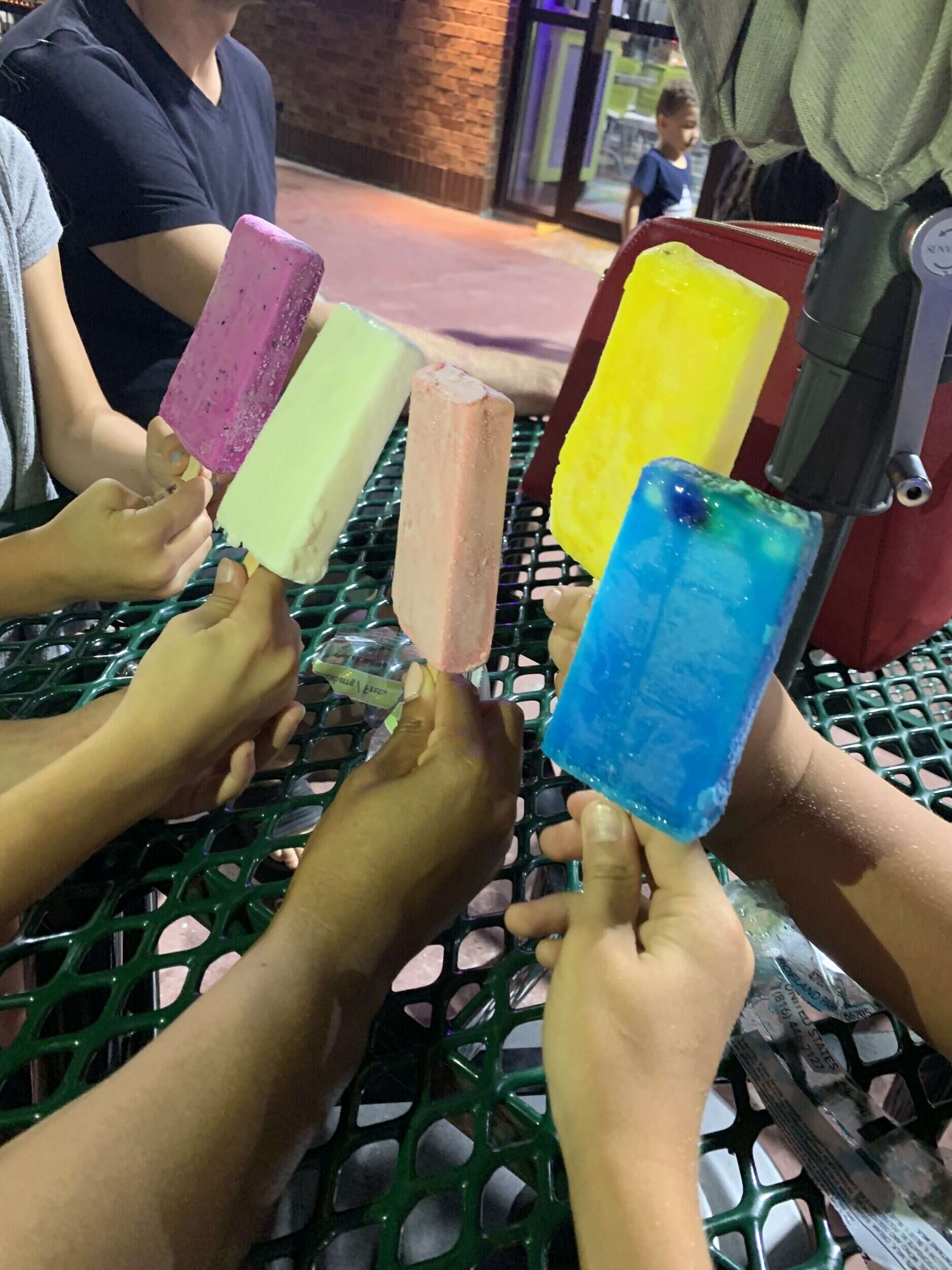
Last summer at Spanish Summer Camp we ATE a rainbow.  Here is a fun list of words to learn if you want to try this project at home.  It is healthy too!
rojo
(ROW-hoh)
red
anaranjado
(ah-nah-rahn-HAH-doh)
orange
amarillo
(ah-mah-REE-yo)
yellow
verde
(BEAR-day)
green
azul
(ah-SOOL)
blue
morado
(more-AH-doh)
purple
la fresa
(lah FRAY-sah)
strawberry
la naranja
(nah-RAHN-hah)
orange (the fruit)
las palomitas
(lahs pahl-oh-ME-tahs)
popcorn
el kiwi
(ehl KEE-wee)
kiwi (the fruit)
los dulces
(lohs DOOL-sehs)
candies
las uvas
(lahs OO-bahs)
grapes

What kinds of rainbows have you been making?  

Friday, March 8, 2013

Learning through Play: CARS // Shapes


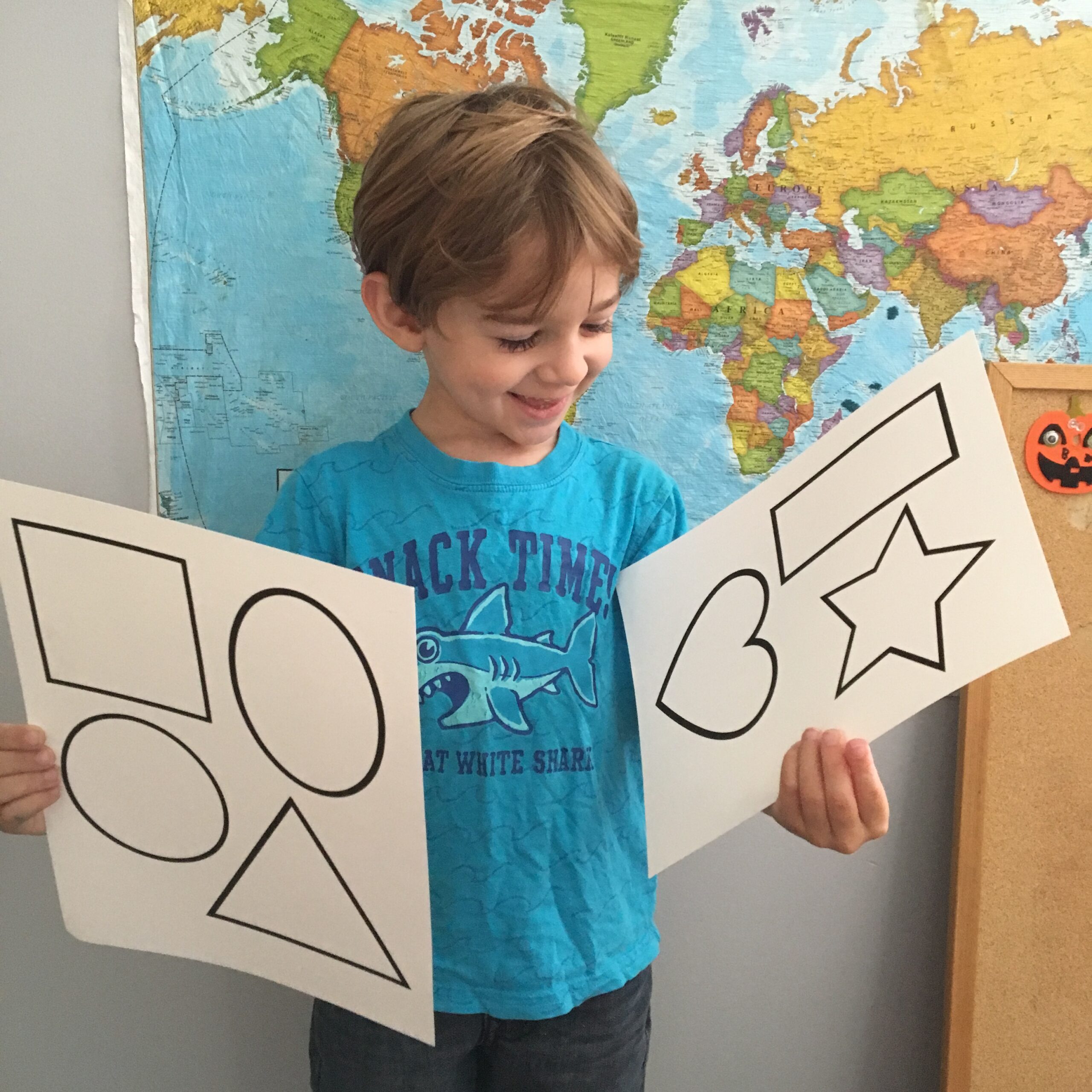
Ready?  Start your engines...here is another fun activity to learn Spanish with CARS!  Today’s post is about shapes—formas (FORE-mahs).  After we sorted our cars by color and compared their differences and similarities, we took them in the kitchen where the floor is best for racing and driving.  I snagged some tape from on top of the fridge and made some roads in the shape of a circle and square.  Below is a fun vocab chart centered around this activity.

coche
(KOH-chay)
car
carretera
(kah-rey-TEAR-ah)
highway
calle
(KAH-yay)
street
círculo
(SEAR-koo-loh)
circle
cuadro
(KWAH-droh)
square
cuadrado
(kwah-DRAH-doh)
square
triángulo
(tree-AHN-goo-loh)
triangle
rectángulo
(reck-TAHN-goo-loh)
rectangle
camioneta
(kah-me-oh-NAY-tah)
van
camión
(kah-me-OWN)
truck

El cuadro (ehl KWAH-droh)
I listed some shapes that we did not make, in case you decide to make streets with other shapes as well.  Our kitchen floor is quite small, as well as the attention span of Mr. Big Stuff, so we just made two shapes.  When you are trying out these activities, do not hesitate to use “Spanglish.”  Just think of the new Spanish words as you would think of any new word for your child.  Use it a lot in context; repeat it with them; have them say it; point it out to your child anytime you see an object that is a new word you have studied.

Try saying things like “Which coche are you going to drive?”  “Oh, what color is your coche? Azul?”  “Let’s drive our coches on the círculo.”  “What shape is this calle?  A cuadro, that’s right!”

For those wanting to speak more in Spanish phrases, try these.

“El círculo es redondo.” (ehl SEAR-koo-loh ehs ray-DOHN-doh)  It means, “The circle is round.”
“¿Cuántos lados tiene el cuadro?” (KWAHN-tohs LAH-dohs tee-EH-nay ehl KWAHD-roh) Which means, “How many sides does the square have?”

el círculo (ehl SEAR-koo-loh)
Depending on the shape you are talking about, you can use the phrase above to ask how many sides of any shape.  Just insert the shape name where you see the word cuadro.

Try watching some of these videos to practice learning your shapes.

¡Feliz shaping!


This post is linked up this week to Crafty Moms Share and I Can Teach My Child.  I follow these blogs by email...you should too!  They have great ideas for projects and learning with your kidlets.

PhotobucketI Can Teach My Child

Thursday, March 7, 2013

A hacer un muñeco de nieve // Making a Snowman

Before all the snow and snowmen melt, how about we learn some new vocab while making a snowman or muñeco de nieve (moon-YAH-koh day nee-AY-vay)?  What types of snowmen or snow-people have you been making?  Here is a fun post with many snowman ideas.  Be sure to leave your ideas in the comments below!

At our house we made some “snow” out of equal parts of shaving cream and glue.  I learned this fun trick at the preschool I used to work at.  I think you can find it on Pinterest or other places on the internet too.  Here is a great tutorial that I found on Sleepyhead Designs Studio that you can check out too!  We adapted ours a little according to the materials we had available at home.  And it was so much fun that we tried it in our Mommy & Me Spanish class last week too.

Below is a photo list of what we used.  You could also print these pictures off and use them as photo Spanish flashcards.

Here is what you will need:

(¿Qué necesitan? means “What do you all need?)


Here are the directions:

Measure and mix equal parts of glue and shaving cream
in a bowl to make 
nieve (snow).
Dollop the nieve (nee-AY-vay) on blue paper.  Let the kidlets choose,
¿Uno, dos, o tres bolas? (¿OOH-noh, dohs, oh trehs BOW-lahs?)
(One, two or three balls?)
   If you want to ask them if they would like more, simply ask, “¿Más? (moss)” They can answer “” (see) or “No (noh).”
  My guess is they will want more.
Next, let them decorate with beads, pipe cleaners,
construction paper, or whatever you
can find around the house.

To talk about their snowmen, as “¿De qué color es _______? (Day kay koh-LORE ehs ______) and fill in the blank with an object you want them to name the color of.  Like...

el gorro (ehl GORE-oh) : hat
la bufanda (lah boo-FAWN-dah) : scarf
los brazos (lohs BRA-sohs) : arms
los botones (lohs boh-TONE-ehs) : buttons
los ojos (lohs OH-hohs) : eyes
la nariz (lah nah-REES) : nose
la boca (lah BOW-kah) : mouth

If you just want to practice the colors...ask them in English, “What color is his hat?”  To which your kidlets can respond “¡Rojo!” or “¡Verde!” Or whatever color the hat is.  Check out these videos if you want extra help learning the colors and their pronunciation. 
Have fun making your snowmen and enjoying the last snows of winter!  How much has it snowed where you are from this winter?  What other kinds of snowmen have you made?

This post is linked up to Say it Two Ways Thursdays at Toddling in the Fast Lane and to the Worldwide Culture Swap hosted by All Done Monkey.  


YourSiteTitleWorldwideCultureSwapperonAlldonemonkey

Thursday, February 28, 2013

Same or Different? // Learn Spanish through Play: CARS


And now for the second installment of our Learn Spanish through Play: CARS series! My intention was not to come across as a cheesy game show host, but I think I failed.  Our previous post in this series taught some Spanish colors with a fun sorting game.  Try playing this "Same or Different" game while sorting your cars by color.  I am sure we all remember that song from Sesame Street: "One of these things just doesn't belong here...One of these things just isn't the same."  Comparing differences helps us to understand concepts like shape, size, and color.

Mr. Big Stuff (my oldest son) just turned three and loves to be contrary.  Our Parents as Teachers lady on one of her visits suggested providing times when he can say "NO!"  This game is perfect for that.  Hold up two cars that have different colors or a different shape.  Say, "Are these cars the same?" to which your child can answer a silly "NO!"  Have the kidlets make funny matches and ask "Are they the same?"  Everyone can say "NO!" together, or "No, that's silly!" (You can switch this around and hold up two cars that are the same and ask, "Are these different?")

Try the "Same of Different" game in Spanish!  The word for same in Spanish is igual.  The word for different in Spanish is diferente.  In Spanish, describing-words (adjectives) have to be plural if the object you are describing (the noun) is plural.  In other words, if you are asking about more than one thing then your adjective has to match that.  When you ask about two cars then, change igual to iguales and change diferente to diferentes.

Here is a quick pronunciation guide.  Make your voice stronger on the syllable with italics.
iguales: ee-gwal-ehs
diferentes: dee-fehr-ehn-tays


In the pictures below, follow the conversation guide in the word bubbles.  The red text is what you say, and the black text is the answer the children give.  ¿Son iguales o diferentes? means “Are they the same or different?”  Son (pronounced sohn or sewn) is the word for they are or are they.  You can ask this question, or if you want to play like above so your child can answer “NO!” just ask: “¿Son igual?” if they are different and “¿Son diferentes?” if they are the same.


Are they the same or different?
Different!


Are they the same or different?
Same!

Are they the same or different?
Same AND different!

Cocinen conmigo // Cook with Me vlog series

Made a cooking video.  Rachael Ray makes it look so easy!  Try talking, peeling an eggplant, looking in the camera, and keeping your olive oil from getting too hot.  Well I could not do it--but it sure was fun!  Cooking is a great way to learn.  Some of you may use cooking to teach your kids math, or hand-eye coordination, or to develop those fine motor skills, or even social skills.  And you guessed it--you can learn Spanish while cooking too.  Cooking helps us learn the command forms of verbs like: stir it, mix it, cut them, peel it.  It also provides opportunity to learn numbers and counting.  Check out this video and see what else you can learn or pick up on!


The recipe I used is from Life as Mom a great website/blog about everything mom!  Jessica Fischer actually has some cookbooks published, and she blogs regularly with great family-friendly and healthy recipes.  I have translated her Vegetable Bolognese with Eggplant recipe into Spanish.  If you are a mom, or someone who loves to plan your meals, check out her free meal plans and grocery lists too!


LA RECETA (The recipe)
Ingredientes

6 chucharadas aceite de olive
1 berenjena, pelado y partido en trozos
1 cebolla, picada
1 pimentón, picado
1 calabacín, picado
1 diente de ajo, picado
sal y pimienta a gusto
1 libra carne molida
1 lata (411 g) de tomates troceados (cortados en dados)
3 tazas salsa de tomate
1 cucharada oregano desecado

1.       En una olla, calenta 4 cucharadas de aceite de oliva.  Añade la berenjena y cocina, mezclándolo a fuego medio por 6 minutos.  Quita de la olla.
2.       Añade las 2 cucharadas de aceite restantes y calenta.  Añade la cebolla, el pimentón, el calabacín y el ajo.  Cocina por 7 minutos.  Añade la sal y la pimienta gusto.
3.       Añade la carne molida y cocina hasta que esté completemente cocida. Mezcla frecuentemente.
4.       Añade los tomates, la salsa de tomates y el orégano.  Añade agua si sea demasiado espeso. Cocina hasta que burbuje y reduce el fuego.  Cubre y hierve a fuego lento por 25 minutos.
5.       Sírvelo sobre pasta.

Tuesday, February 26, 2013

Quick & Easy Spanish (Pre-K) // Learn Spanish through Play: Cars

The benefits of learning a foreign language are endless!  From social skills, to fighting dementia, to increasing brain activity and scoring higher on ACTs--bilingual is best.

You may have taken Spanish in high school and forgotten it all; you may know a little Spanish from Dora or Sesame street; you may speak a little Spanish from your restaurant days.  That is awesome!  Keep going!  Below is a quick and easy Spanish lesson that you can slip right into your playtime at home with your kidlets, with your students in your preschool class, or even to teach yourself.  Thinking like a kid is the best way to learn Spanish and it is spelled F-U-N.

This is the first post in the series Learn Spanish through Play: Cars

Get out your favorite bucket'o cars and dump them out in a wide open space for sorting.  They are already on the floor (always the case at my house)?  Even better.  First off, as the parent or educator, acquaint yourself with these Spanish color words and their pronunciations.  Note the emphasis goes on the syllable in italics.


negro (nay-grow): black
blanco (blahn-koh): white
gris (grees): gray
plateado (plah-tah): silver (color)
dorado (dor-ah-doh): gold (color)
café (cah-fay): brown
rosado (roh-sah-doh): pink
morado (more-ah-doh): purple
rojo (roh-hoh): red
anaranjado (ah-nah-rahn-hah-doh): orange
amarillo (ah-mah-ree-yo): yellow
verde (bare-day): green
azul (ah-sool): blue


Many ways exist to sort cars.  If you have kidlets, I am sure you have sorted your toy cars thousands of times--and it is still fun!  You may want to grab some index cards and have your children write out the name of the Spanish color with a crayon of that color.  If they have not mastered writing yet, write it out for them in marker, and they can color a swatch on top with a crayon of the corresponding color.  As you are coloring or writing, practice saying the color words together.  Never be afraid of making mistakes.  Think about babies.  If they never tried something new for fear of messing up or looking silly--well, you get the idea.

If you do not have index cards, just set a car of each color in a designated area and talk about the word for that color in Spanish as you set it down.  You can even try these phrases:

¿De qué color es? (day kay koh-lore ehs) when asking about one, and
¿De qué colores son? (day kay koh-lore-ehs sewn) when asking about more than one (if they are all the same color).


Once you all feel comfortable with the words and have designated an area for sorting, get to it!  Lead the activity with lots of animation and excitement--that way the kidlets will really catch on and pay attention.  When you grab a car say, "Hmmm, what color is this one? Oh! Verde!"  Or, "Now how do you say this color again in Spanish?"  Act like you are stumped and see if your kidlets can think of it: "Do you remember?"  When they think of it be sure to show how impressed you are.  Fun and affirmation will go a long way with learning a new language--or anything new!  Create an atmosphere where kids feel safe to try at something new without worrying about mistakes.  

Looking for some videos to help you practice colors in Spanish and pronunciation?  Go here to a playlist I have created on my YouTube channel.

Feliz colorizing!


Saturday, February 16, 2013

Going to the fire station // Vamos a la estación de bomberos


With kids anything can be a learning opportunity!  The same goes for learning Spanish.  Look for ways in your everyday to learn new Spanish words or phrases…the more you can integrate learning when you are hearing, seeing, feeling, tasting, smelling or touching—the more that learning experience will stick in your mind.

We went to the fire station the other day with a group of preschool friends.  Our local firefighters were so hospitable and welcoming!  They got down on the kids’ level and showed them all their tools, the different parts of the truck, and explained the distinct jobs of all the different firefighters—I learned a lot myself!
I have two boys so fire, danger, shooting water at stuff, and using BIG tools is just what they love to talk about—so what better time to learn Spanish too!  Next time you go to the fire station, practice learning these fun new Spanish words! 

Whether you are at a fire station, reading a book about firefighters, or looking at the pictures below, here is a fun game to play (and you can apply this game to other Spanish words you are learning):

You ask –¿Dónde está el bombero? (DOHN-deh eh-STAH ehl bohm-BEAR-oh) It means, “Where is the fire fighter?
When the kids find it, teach them to say —¡Aquí está! (ah-KEY eh-STAH) Which means, “Here he/she/it is!”

You can fill in the blank with any of the words in the pictures.  For example: “¿Dónde está el camión de bomberos?”  (Where is the fire truck?)  “¿Dónde están las botas?”  (Where are the boots?)  

Just follow this formula:

¿Dónde + está (for singular item) or están (for plural items) + the word “the” + noun/item?
Notice there are four ways to say “the” in Spanish.  El (masculine singular), la (feminine singular), los (masculine plural), and las (feminine plural).  You can know which one to use by checking the word bank at the end of this post.

Happy firefighting!  


Firefigher Vocabulary
firefighter—el bombero/la bombera
fire station—la estación de bomberos
fire truck—el camión de bomberos
siren—la sirena
fire hydrant—la boca de incendio
fire hose—la manguera
fire hose nozzle—la boca de manguera
fire helmet—el casco
fire suit—el traje de protección
oxygen tank—el tanque de oxígeno

This post is linked up to:


I Can Teach My Child